
Fitness raceWhat it is, and how to start
A fitness race is one timed course that alternates running with functional strength stations. No obstacles, no mud — a fixed format, identical for everyone on the floor, that measures how complete an athlete you are. Here is how it works, and where you can race one.
What is a fitness race?
A fitness race is a timed competition that alternates running with functional strength stations. Everyone covers the same distance, moves the same equipment and works to the same standards, so the finish time is a like-for-like comparison — not a matter of who drew the kinder course.
It sits between two sports people already know. A road race asks one question: how fast can you run? A gym competition asks another: how strong are you, and how well do you move? A fitness race asks both at once, and then asks whether you can keep answering while your heart rate stays pinned. That combination is why the format is usually described as hybrid, and why it rewards the well-rounded athlete over the specialist.
What makes it different from an obstacle run
Obstacle races are built around terrain and surprise: mud, water, walls, and a course you cannot fully train for. A fitness race removes the variables on purpose. The stations are standard gym equipment, the distances are published in advance, and the floor is flat and indoors. Nothing about it is random, which is exactly what makes it measurable.
That has one practical consequence worth knowing before you sign up: you can train for it precisely. You know the movements, the loads and the running volume months ahead, so preparation is a training plan rather than a gamble.
What a race day actually looks like
You start in a heat with a wave of other athletes, on the clock from the first step. You run, you hit a station, you finish the work at that station, and you run again. Repeat until the course is done. A judge at each station holds you to the movement standard: reps that do not meet it do not count, and the penalty is doing them again.
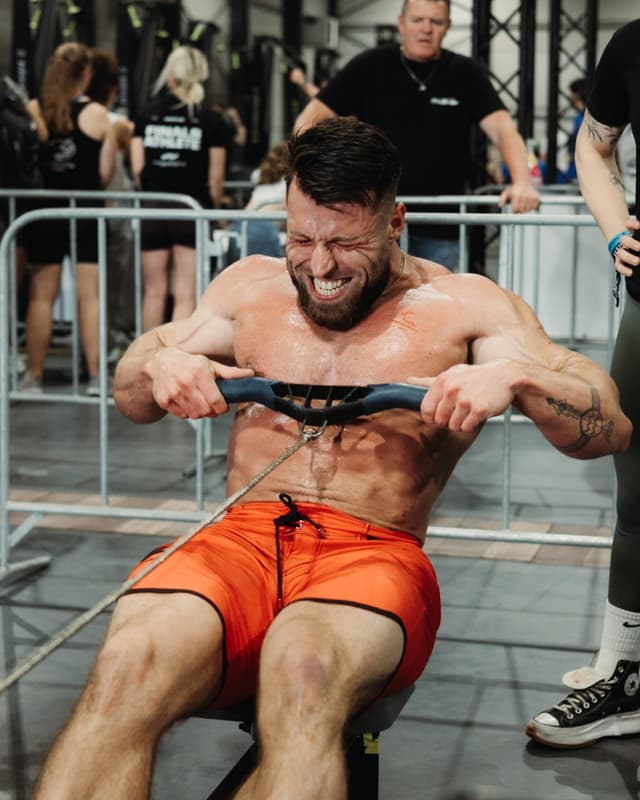
TYRUN runs four laps of a 600 m run into two stations each — 2.4 km of running and eight stations in total, from the Echo bike and the sled to devil press and a sandbag carry. The full breakdown of the season workout is on the race page.
Do you need to be fit already?
Less than most people assume. The format is scaled by division rather than by distance: everyone races the same course, and the loads change with the level you enter. That is the whole point of having a Scaled division — a first-timer and a national-level athlete can race the same event on the same day, each at a weight that makes sense for them.
If you can run a few kilometres without stopping and you have spent some time in a gym, you can finish a fitness race. Whether you want to finish it comfortably or competitively is what decides which division you enter.
How to train for your first one
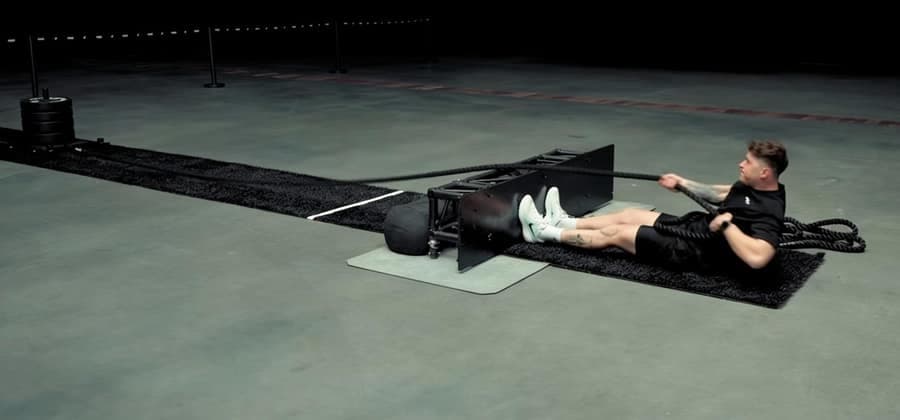
A timed competition that alternates running with functional strength stations — rowing, biking, sled work, carries and similar — in a fixed format that is the same for every athlete. Because the course never changes, finish times can be compared directly between athletes and between events.
Yes. TYRUN races a full season across Belgium and the Netherlands, with editions in Kortrijk, Hasselt, Antwerp, Liège and Ghent, plus Dutch editions in s-Hertogenbosch and Amsterdam. The current calendar, with dates and tickets, is on the events page.
The category covers a few different formats: hybrid fitness races that pair running with workout stations, functional fitness competitions held entirely inside a gym, and obstacle course races built around terrain. They ask for different things — a fitness race is the one that tests running and strength together under a standardised, repeatable course.
For most athletes, somewhere between one hour and ninety minutes of continuous work. Elite finishers go considerably faster. There is no cut-off that ends your race early at TYRUN — the format is designed so that everyone who starts, finishes.
Both. You can race solo, in doubles where you split the work with a partner, or as a relay team. The course is the same in every format; what changes is how the work is divided.
Running shoes you can also lift in, and clothes you can move in. Everything else — bike, rower, ski, sled, sandbags, dumbbells — is on the floor and provided at the event.